
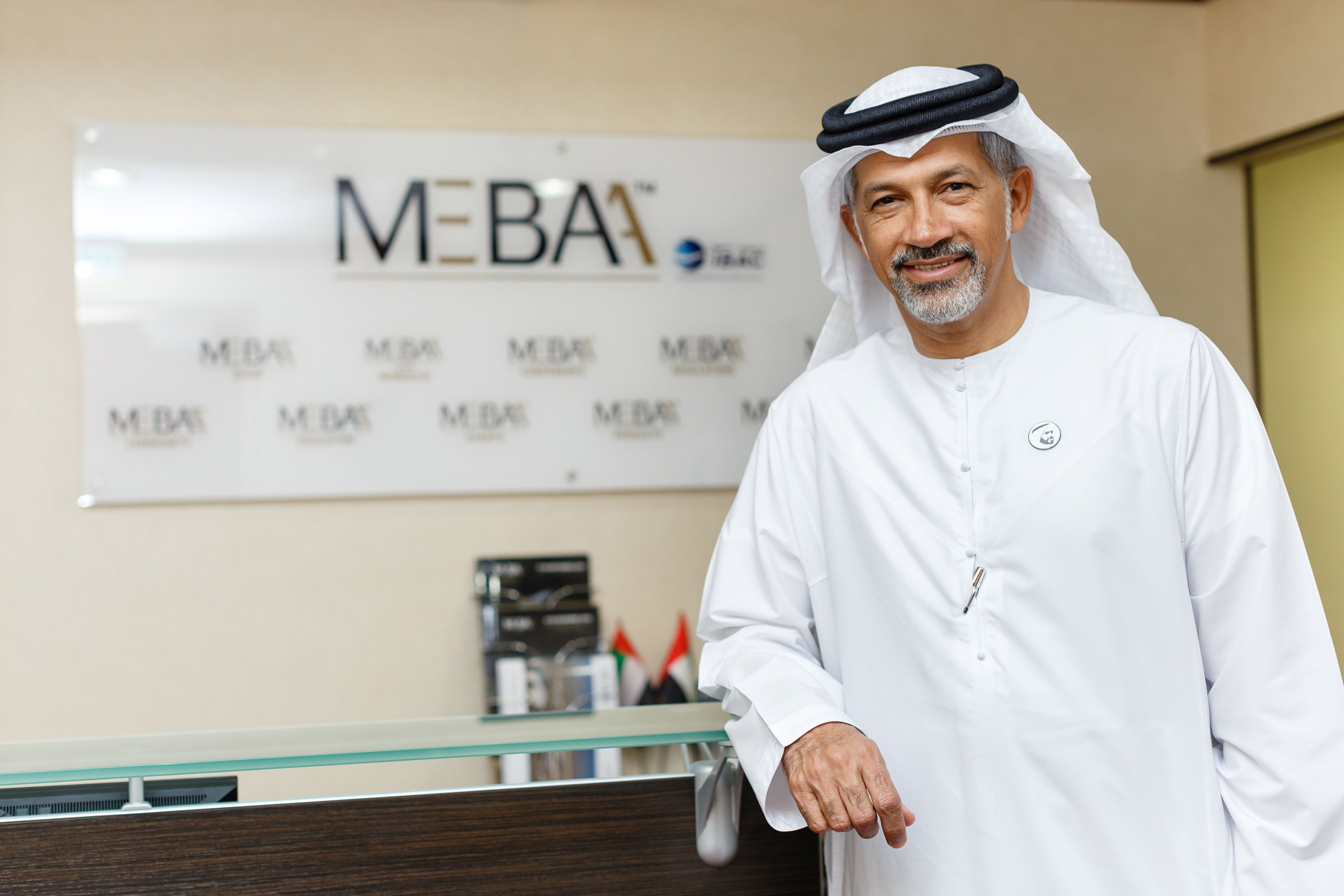
As the Middle East and North Africa Business Aviation Association (MEBAA) marks two decades of shaping regional skies, the sector is undergoing a profound structural evolution. Moving well beyond legacy whole-ownership models, business aviation across the GCC is rapidly diversifying, fuelled by surging commercial charter demand, rising domestic appetite linked to Saudi Arabia’s landmark giga-projects, and the near-term arrival of commercial eVTOL networks.
Ahead of the MEBAA Show this December, Founding and Executive Chairman Ali Ahmed Alnaqbi reflects on the past 20 years, unpacks the complementary synergy between the UAE and Saudi aviation hubs, and details how next-generation air mobility will integrate into existing VIP infrastructure.
With MEBAA celebrating its 20th anniversary at the upcoming MEBAA Show in December, how has the composition of the Middle East fleet structurally shifted, particularly between traditional corporate/family office ownership versus high-growth commercial charter fleets?
Ali Ahmed Alnaqbi: The Middle East business aviation fleet has evolved considerably over the past 20 years. Historically, much of the market was driven by traditional ownership models, including large corporations, government entities and family offices operating aircraft primarily for their own transportation needs. While those segments remain important today, we have seen a clear shift toward commercial operators and managed fleets as more users seek the flexibility and cost advantages offered by charter and aircraft management solutions.
The rapid expansion of professional charter operators across the UAE and the wider GCC is a significant development. As the region has matured, business aviation has become more accessible to a broader range of users, including entrepreneurs, SMEs and international investors. They may not require full aircraft ownership but still value the convenience and productivity provided by business aviation. This drives demand for charter services and encourages operators to expand and modernise their fleets.
We also see an opportunity for greater fleet diversification. While large-cabin aircraft continue to dominate the region’s fleet, growing demand for regional connectivity is creating a stronger case for additional light and midsize aircraft. This is an area that remains one of the most exciting growth opportunities for the industry and will become even more important as new mobility solutions, such as air taxi operations, begin to emerge.
The UAE and Saudi Arabia are not competing markets in the traditional sense. They are highly complementary
– Ali Ahmed Alnaqbi
With the massive rise of giga-projects across Saudi Arabia (Red Sea, NEOM, AlUla) driving regional private jet movements, are we seeing operators shift permanent assets into the Kingdom, or is the UAE consolidating its position as the primary operational and charter management hub for the wider GCC?
Ali Ahmed Alnaqbi: These giga-projects are undoubtedly creating significant opportunities for business aviation and generating increased demand for private air travel throughout the Kingdom.
However, I would describe the current trend as one of expansion rather than migration. The UAE and Saudi Arabia are not competing markets in the traditional sense. They are highly complementary. Due to its size and geography, Saudi Arabia has a strong domestic aviation market. On the other hand, the UAE serves as a highly connected international gateway linking regional and global business activity. Many operators continue to manage aircraft and commercial operations from the UAE while simultaneously expanding their presence and capabilities in Saudi Arabia to serve growing demand.
Looking ahead, I expect to see more business aviation activity in Saudi Arabia as major economic and infrastructure projects are completed. The UAE is likely to remain as the leading hub for charter management, aircraft management and international business aviation operations. Ultimately, growth in Saudi Arabia should be viewed as additive to the wider GCC market, creating new opportunities for operators across the entire region rather than shifting activity from one market to another.
Both Dubai and Abu Dhabi are aggressively pushing toward commercial eVTOL and air taxi operations. From MEBAA’s standpoint, how will urban air mobility integrate into existing business aviation FBOs and VIP terminal ecosystems over the next 24 to 36 months?
Ali Ahmed Alnaqbi: Advanced air mobility such as air taxis and eVTOLs are among the most significant growth opportunities for business aviation in the Middle East, particularly because they will complement existing options in the region. These air taxi services can provide a more affordable and efficient last-mile transport option for business aviation customers. The existing business aviation infrastructure, such as FBOs and VIP terminals, could serve as a natural foundation for urban air mobility operations.
Additionally, the UAE government has been proactive and supportive regarding the development of advanced aviation infrastructure and the associated regulatory framework.
Dubai's first vertiport was completed and certified earlier this year, which means we will be seeing air taxis in operation very soon. These will complement existing business aviation services through better connectivity between cities, airports and key business destinations across the UAE.
I believe that these new forms of air mobility will play an increasingly important role in the industry's evolution. Air taxis will strengthen the overall aviation ecosystem by providing more transportation options and driving further growth of the sector.