
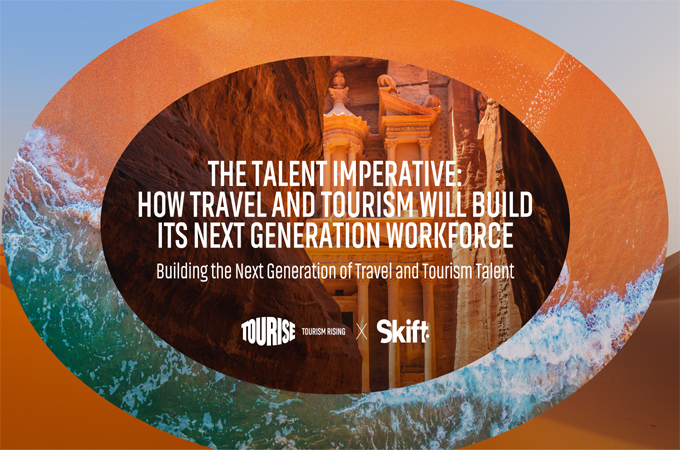
The global travel and tourism industry could face a workforce shortfall of more than 43 million workers by 2035, potentially leaving labour supply 16% below demand despite the sector's expanding contribution to the global economy, according to a new report by TOURISE and Skift.
The report, titled The Talent Imperative: How Travel and Tourism Will Build Its Next Generation Workforce, examines the challenges facing the industry's workforce, drawing on Skift Research and insights from leaders across hospitality, aviation, academia, destination marketing, cruise and online travel.
According to the findings, travel and tourism supported a record 366 million jobs in 2025 and is expected to generate an additional 91 million roles by 2035, accounting for one in three net new jobs created globally. However, the projected labour shortage could constrain the industry's ability to sustain this growth.
The report identifies workforce readiness, employee retention and skills development as key challenges, highlighting that recruitment alone will not address the sector's talent requirements.
One significant finding concerns the time required for new employees to become fully productive. While many tourism organisations can fill vacancies relatively quickly, 42% of hiring managers report that new recruits take between four and six months to reach full productivity. The report therefore highlights the importance of stronger onboarding programmes, workplace training and continuous upskilling to improve workforce readiness.
The changing expectations of younger workers are another important consideration. Generation Z increasingly prioritises flexible working arrangements, company values and opportunities for rapid career advancement when choosing employers. Tourism businesses will therefore need to provide clearer career progression pathways and demonstrate the long-term opportunities available within the sector to attract and retain younger talent.
The report also highlights the importance of developing local talent pipelines while maintaining access to international skills and expertise. Closer collaboration between employers, local communities, schools and training institutions could help expand recruitment opportunities and create more sustainable pathways into tourism careers.
Technology and artificial intelligence are identified as important tools in addressing workforce challenges. According to the report, AI can automate routine tasks, accelerate employee training and improve productivity, allowing tourism professionals to concentrate on areas where human capabilities remain essential, including decision-making, empathy and customer relationships.
The findings suggest that technology should complement rather than replace the human workforce, particularly in hospitality and tourism businesses where personal interaction remains central to the visitor experience.
“Tourism’s next chapter will be built as much by people as by places,” said Ahmed Al Khateeb, Minister of Tourism of Saudi Arabia and Chairman of TOURISE. “As our sector grows, investing in destinations and infrastructure must be matched by investment in the people who bring them to life. The projected workforce gap is a clear call to action. Governments, industry and educators must work together to create stronger pathways into tourism, accelerate skills development and give the next generation meaningful opportunities to build lasting careers. Technology will transform how we work, but people will remain at the heart of tourism.”
The report calls for closer cooperation between governments, tourism businesses and education providers to align workforce policies, training programmes and industry requirements.
It also emphasises the need for employers to invest in employee development and create working environments that support long-term careers, as the industry competes with other sectors for skilled workers.
With global tourism employment projected to expand significantly over the next decade, the findings highlight the growing importance of workforce planning alongside investment in infrastructure, destinations and technology.
The report concludes that the industry's ability to meet future demand will depend not only on creating new jobs but also on ensuring workers have the skills, training and career opportunities needed to fill them. -TradeArabia News Service