
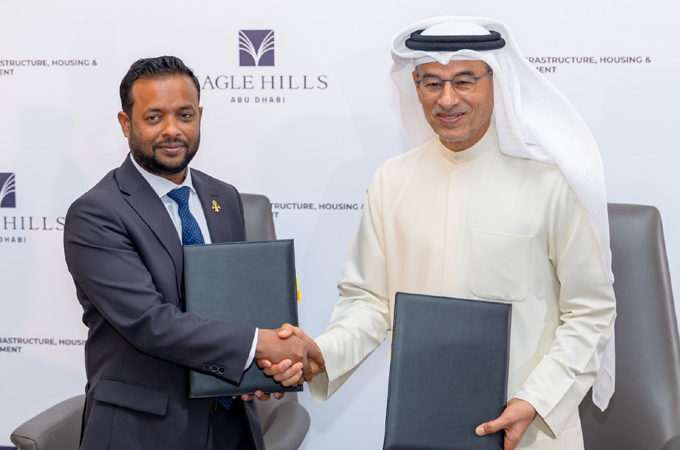
The Government of Maldives and Eagle Hills have signed a Commercial terms agreement for the development of Maldives Waterfront and Marina, a major new integrated island destination in the Ras Malé area.
The deal is described as one of the most ambitious development
initiatives in the country’s history, outlining the project’s shared vision and
principal commercial terms, with further detailed terms to be developed as the
initiative progresses.
Eagle Hills, led by Chairman Mohamed Alabbar, said the project aims to
build “responsibly” on the Maldives’ global appeal while creating a
“world-class” destination. Alabbar emphasised the country’s “unmatched beauty
and global appeal,” adding that the company’s ambition is to “build responsibly
on that strength and create something truly world-class.”
The overall development scale is envisioned at around $20 billion across
multiple phases, positioning the project as a long-term, transformational plan
for the Maldives.
The destination is planned as a waterfront and marina hub combining
international tourism offerings and residential experiences under one
integrated development model.
The development will bring together a broad mix of facilities including
international hospitality properties, premium residences and branded
residences, as well as a world-class marina.
It will also feature waterfront leisure, retail, dining, entertainment,
wellness, education, healthcare, and community amenities.
At the centre of the masterplan is an internationally significant
waterfront environment where hotels and resorts, residential options, and
marina-led experiences converge around the water through promenades and public
spaces.
Dr Abdulla Muththalib, Minister of Infrastructure, Housing and Urban
Development for Maldives, said the agreement reflects a partnership he
described as backed by major global real estate achievements. He highlighted
Eagle Hills’ track record from “Downtown Dubai” to “Belgrade Waterfront,”
stating, “In Eagle Hills and its Chairman, Mr. Mohamed Alabbar, the Maldives
has a partner whose record speaks for itself — from the making of Downtown
Dubai to Belgrade Waterfront and destinations across three continents, few
names in global real estate carry the same authority in building city-scale
destinations from the ground up. That is the calibre of partnership we have
secured for Ras Malé.”
Muththalib also framed the project as a major economic catalyst expected
to strengthen the Maldives’ tourism offer by creating new reasons to visit,
stay longer, return and invest.
The destination is projected to attract new international visitor
segments and support the country’s positioning as a leading global tourism and
lifestyle destination.
The development is expected to broaden the tourism sector and increase
year-round economic activity by combining tourism, residential life, and
supporting public infrastructure.
At full maturity, the project is projected to welcome more than one
million visitors annually and generate over $2 billion in annual tourism
revenue.
Environmental stewardship and responsible development are positioned as
core requirements throughout planning and delivery.
The masterplan is expected to respond to the Maldives’ close
relationship with the ocean and its sensitive island environment, with
sustainability and resilient infrastructure intended to protect the natural
setting.
Muththalib added: “For the Maldives, this is the largest investment
programme in our history — tens of billions of dollars of foreign investment
moving through our banking system, more than 54,000 jobs, thousands of homes
for Maldivian families, and direct revenue to the State from every sale,
achieved without tax giveaways and without government borrowing.”
Economic impact estimates indicate the project could attract more than $30
billion in gross foreign investment over its lifetime, with approximately $18
billion expected to represent net foreign investment into the country.
The wider activity generated is also expected to support growth across
hospitality, construction, retail, marine services, technology and other
sectors, contributing additional tax revenue.
Over the life of the project, it could create more than 54,000 direct
and indirect employment opportunities, offering new career paths for
Maldivians, strengthening local supply chains, and sustaining demand for local
businesses and professional services.
The project aims to translate international investment into long-term
economic value for the Maldives and its people, while establishing a waterfront
and marina destination aligned with the country’s international reputation.
Muththalib concluded: “Most importantly, this project establishes a structured, world-class real estate sector for the Maldives — a new pillar of our economy standing alongside tourism. It is a decisive step on our path to becoming a high-income country by 2040.” -TradeArabia News Service